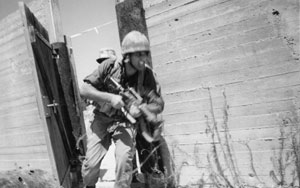
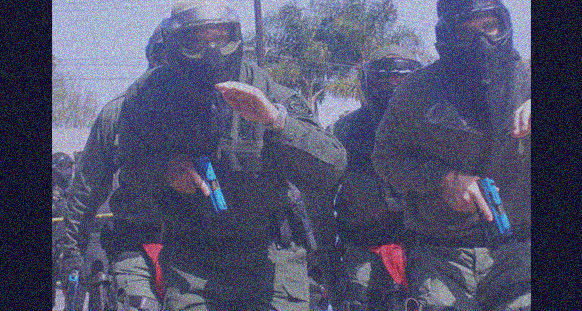
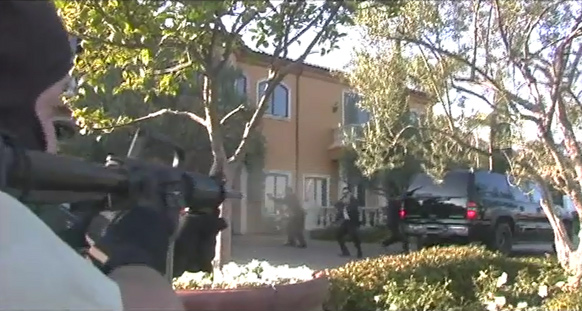

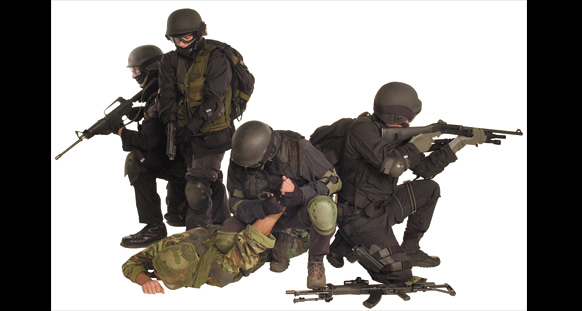
Close CombativesIntelligence reports reveal that terrorists train in hand-to-hand combat and that a large number of foreign soldiers are proficient in the martial arts and in the use of edged weapons. The Close Combatives training evolution teaches proven fighting skills that ensure warfighters’ readiness for immediate deployment into high risk areas where close contact with enemy combatant is likely. The training is designed to enhance combat survival skills and can be adapted into existing SOP/ROE. Training is done in uniform, with load bearing equipment and individual weapons, as well as on multiple terrains and in confined spaces. Battlefield conditions such as low light and battle fatigue are simulated during the training sessions. The skills taught are all compatible with high-speed transitions to and from long guns and handguns. |
PHASE 1
Preparation
Combat fitness
Survival & Winning Mindset
Force escalation continuum
Systems and target anatomy
Reflex development and timing drills
Autonomics and reactionary mechanismPro-Active Measures
Detainee movement and control (conscious and unconscious)
Multiple detainee handling techniques and procedures
Control of non-compliant and combative subjects
Unarmed close quarters combat
Counter Measures
Emergency action and sudden attack survival
Separation techniques from holds, locks and chokes
Weapons Combat – Rope/chain, baton/rifle, stationary weaponry
Advanced fighting skills – on the ground, prone, supine, sitting, kneeling
PHASE 2
Pro-Active Measures
Fear control and offensive mindset
Common patterns of combative resistance
“Search Team” assignment, responsibility and procedures
Identification of improvised, concealed and disguised weapons
Advanced fighting skills – in limited space, in a car, in dim light
Weapons Combat – Knife, bayonet, machete, improvised weaponry
Counter Measures
Defense and disarm against blunt weapons
Edged weapons attack survival
Multi-engagement combat
PHASE 3Pro-Active Measures
Quick Kill – sentry takedown and covert neutralization
“Prisoner Handling Team” assignment, responsibility and procedures
Team extraction tactics and rapid subject removal from within crowds
Advanced fighting skills – in sand/mud/water, while tied and blindfolded
Weapons Combat: Multiple weapons use and transition to firearms
Counter Measures
Firearms disarm and gun take away
Hostile crowd and riot conditions survival tactics