
-
-
Hostage Rescue
Public Transportation / Tubular Environment
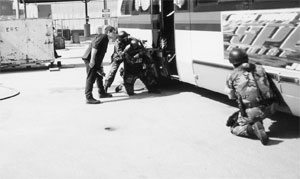
Passenger abduction and hostage taking are commonly used by terrorists and hardcore criminals. The inside of a hijacked bus, train or airplane is one of the most challenging environments in which a force can be called upon to operate. A combination of thin metal walls, extremely crowded lines of fire, difficult approach and the possibility of sudden location change are just a few of the volatile conditions that make mobile environment hostage rescue a complex task. Conducting a successful hostage rescue operation requires specific preparation and training. Many teams are still using tubular assault tactics that might work when used against a single hostage taker but will fail when applied against a dedicated group of trained terrorists.
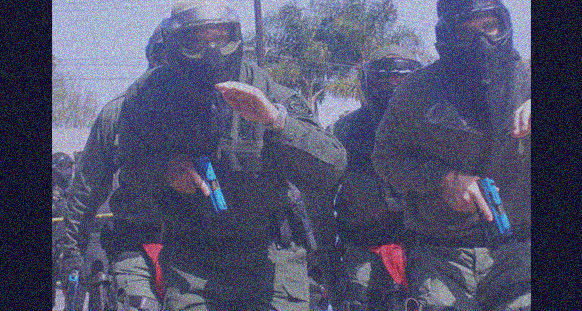
| In order to succeed, the rescue must be carefully coordinated and executed swiftly. Using realistic training scenarios, we teach operators to strike with surprise and precision in order to minimize casualties. Through the use of our innovative simulation and live fire drills, we prepare teams to quickly and safely resolve a hostage crisis in the mobile environment. | 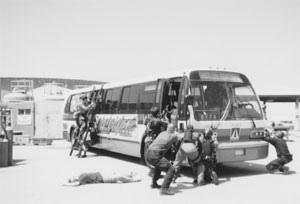 |
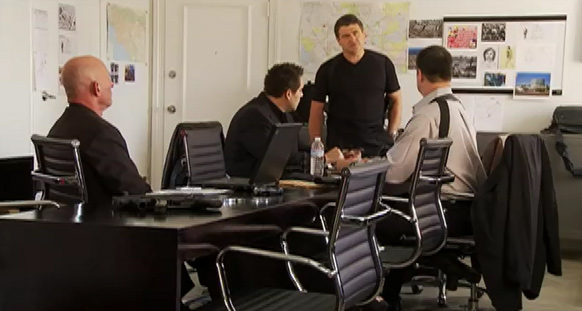
You will learn:DAY ONE – Planning and Priming Tactics
• OPFOR MO and case studies
• Vehicle approach and breaching
• Decoys and distraction concepts
• Strategic use of exterior illumination
• Perimeter security and containment
• Identification of hostiles and hostages
• Sniper team deployment and observation
• Threat evaluation and weapons perception
• Environmental and psychological facilitators
• Field interrogation and intelligence collection
• Information analysis and pre-assault team brief
• Incident command center and operational control
• Tactical warm up and weapon system preparation
• Assault planning and time based tactical modeling
DAY TWO – Advanced Simulation (force on force)
• Tubular assault
• Window porting
• Weapon transition and retention
• Sniper initiated entry and ballistics
• Selective shooting and firing on the move
• Search and arrest tactics and scene clearing
• Vehicle immobilization and disabling methods
• Immediate threat concepts and target isolation
• Coordinated, Simultaneous, Multi-Directional Assault
• Moving targets acquisition and shooting on the move